
Some people experience problems after getting Botox injections, such as: I got a headache after getting Botox injections. Or some people feel that... My face isn't as firm as I expected. This has led to questions about the cause, especially since it's a popular procedure that effectively reduces wrinkles and reshapes the face. In reality, these symptoms can arise from several causes, including the injection site, the amount of Botox, the doctor's technique, or even each individual's body's response. Some symptoms are considered normal and will disappear on their own within a few days, but in other cases, more caution is needed. This article will explore these possibilities. Why do some people experience headaches after Botox injections, and why do some people's faces not feel tighter? Along with tips on how to observe and care for yourself after the injection for greater safety.
Main content
- Botox Botox involves injecting a substance called Botulinum toxin type A directly into the muscle. Botox works by blocking the nerve signaling (neurotoxin) to the muscle.
- My face isn't tight after getting Botox. This may be due to skin structure and type of wrinkles, incorrect injection site, insufficient dosage, Botox resistance, use of counterfeit Botox, and improper storage.
- I got a headache after getting Botox injections. This can be caused by muscle adaptation, injections in high-risk areas, body reactions, injection pressure, stress, and anxiety.
- Botox injections will begin to show results within 3-7 days. After the injection, noticeable results will be seen within 1 month, but the time frame for seeing results may vary depending on several factors.
What is Botox and how does it work?
Botox It is a type of protein extracted from the bacteria called Clostridium botulinum, of which there are seven types, but the type most commonly used in the cosmetic industry is... Botulinum toxin type A Botox works by directly suppressing the nerve signaling (neurotoxin) to the muscles.
Therefore, after Botox injection, the drug blocks the release of acetylcholine, a substance that signals muscles to contract. Without this signal, the muscles in the injected area become temporarily paralyzed or rest, resulting in a reduction of wrinkles, a slimmer facial shape, sharper jawline, reduced body odor, reduced sweating, and reduced calf size. It can also treat various conditions such as migraines and Office Syndrome.Botox injections for migrainesThe results after Botox injection usually last about 3-6 months.
Why doesn't my face feel tight after getting Botox?
If your face doesn't feel tight after Botox injections, it can be due to several reasons, including:
- Skin structure and types of wrinkles. Botox injections can correct wrinkles caused by movement, but for deep, permanent wrinkles, Botox alone may not be sufficient and other procedures may be needed.
- Injected in the wrong location. The doctor administering Botox injections must be skilled, as Botox must be injected into the desired muscle layer. If injected too shallowly or too deeply, the medication may not reach the desired point.
- The amount of medication used was insufficient. If the muscles in the injection area are very strong, such as in the jaw or forehead where deep wrinkles occur, but the doctor uses too little medication, Botox may not be able to completely inhibit muscle function. This means the muscles can still move normally and don't feel tight.
- Using counterfeit Botox and improper storage. Counterfeit Botox is imported from abroad without proper drug control, resulting in drug degradation or contamination. Furthermore, improper storage can also lead to drug deterioration.
- Botox resistance has occurred. This occurs because the body's immune system perceives botulinum toxin molecules as foreign, thus producing antibodies to neutralize and destroy the drug.
Why do I get a headache after getting Botox injections?
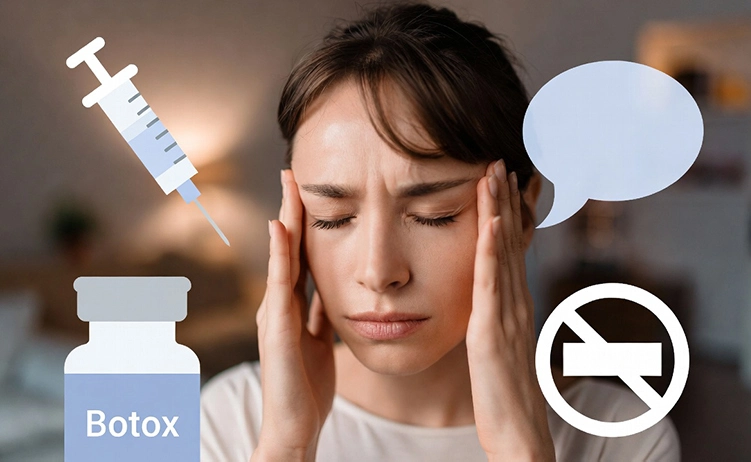
Most people may experience side effects after Botox injections, but these are usually not serious, normal, and typically temporary, disappearing within 24-48 hours. These include swelling, bruising, or redness from the needle. Headaches, however, can be caused by several factors.
Muscle adaptation When Botox is injected, the drug causes the muscles in the injected area to relax. This forces the surrounding muscles to work harder to compensate, and this abnormal muscle tension often leads to tension headaches.
Injecting at-risk areas. For example, areas such as the forehead, temples, and jaw, which have a large number of nerves, may trigger headaches.
Body reaction After the injection, the body may react to the medication or the needle site, resulting in minor inflammation that causes chills, body aches, and a headache similar to a fever.
Pressure from injection During an injection, if the doctor injects the medication too quickly or uses too much saline solution, it can lead to pressure buildup in the tissues, causing immediate tension headaches after the injection.
Stress and anxiety. In some cases, patients may experience stress and anxiety during the procedure, leading to increased blood pressure and muscle tension in the neck and shoulders, which indirectly causes headaches.
By preparing our bodies, getting enough rest, and choosing services from qualified professionals, these minor symptoms can be seen as short-term signs that the body is undergoing a transformation towards the beautiful results we desire. For individuals experiencing headaches, if they are not severe, cold compresses or pain relievers can be used. However, if the pain is severe or persists for more than 3 days, a doctor should be consulted immediately.
How many days does it take to see results after a Botox injection?
Typically, Botox injections begin to show results within 3-7 days after injection, with noticeable results within 1 month. However, the time frame for seeing results may vary depending on several factors, such as the injection site, the problem being addressed, and post-treatment self-care.
Self-care after Botox injection.
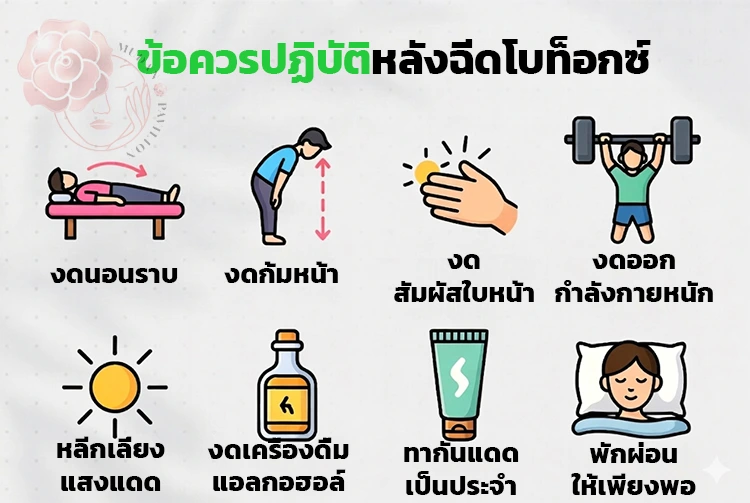
After receiving Botox injections, patients must undergo self-care to ensure effective results and to avoid the aforementioned side effects, including side effects and headaches.
- The person doing the injection must try to move the muscles in the injection area for about 20 minutes to allow the Botox to spread into the muscles faster.
- 4 hours after the Botox injection, you should avoid lying down or resting your head to prevent the Botox from flowing to other areas, which may cause unwanted side effects.
- After getting botox injections, apply ice packs for 24 hours, followed by warm packs for another 24 hours.
- After receiving Botox injections, consume foods rich in zinc, such as meat or seafood, but in appropriate amounts.
- Drink plenty of water to help the botox spread better.
- Avoid direct sunlight for approximately 1-2 weeks after the procedure.
- You should see your doctor as scheduled to monitor your symptoms and results.