

Droopy eyes or uneven eyes It's a problem that makes many people lack confidence, and it can also affect their vision in daily life. One common cause is weak eye muscles, which causes the eyelids to droop or the eyes to not fully open, resulting in the eyes looking dull, like they're always sleepy. Many people think that surgery is the only way to fix it, but in fact, there are currently many methods that can help adjust the eyes to look brighter and more balanced without pain. This article will take you to understand the negative effects of droopy eyes, uneven eyes, and easy and safe ways to fix it.
Table of Contents
- Droopy eyes, uneven eyes
- Droopy eyes, uneven eyes, what are the negative effects?
- Causes of drooping eyes and uneven eyes
- How to fix droopy eyes, uneven eyes, and weak eye muscles
Droopy eyes, uneven eyes
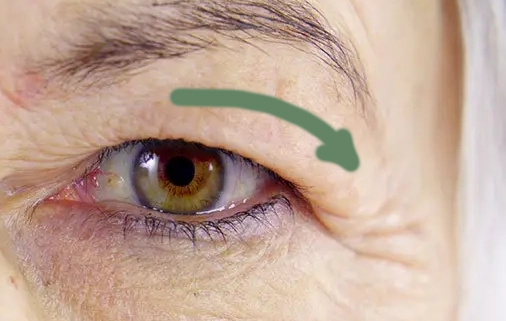
Ptosis is Symptoms are when the upper eyelid droops more than normal, which may cause it to partially cover the pupil, resulting in reduced vision and possibly causing eye discomfort. Symptoms that are often seen include: one or both eyelids drooping, making one look sleepy or tired all the time. If it is a case of only one side, it will make the eyes look uneven, one side is normally large, the other side is small, etc.
Importantly, some patients may need to use their forehead muscles to lift their eyebrows or tilt their head to improve vision. This may also lead to narrowed vision, blurred vision, or double vision, especially when using their eyes for long periods of time.
Droopy eyes, uneven eyes, what are the negative effects?
When the eyelid droops excessively, it obscures the vision, requiring the user to lift their head or eyebrows to improve vision. This can lead to forehead pain or headaches. Pressure from the sagging eyelids or skin can also affect the shape of the eye, causing astigmatism. Beyond vision, physical appearance can also be affected, leading to a loss of self-confidence, particularly when meeting others, and a loss of personality. Furthermore, it can impact jobs that require good looks and credibility, such as salespeople, receptionists, singers, and actors.
But if for the science ofFacial PhysiognomyGood eyes should be large, round, and equally shaped on both sides. The whites of the eyes should be pure white, without redness or dark spots. The corners of the eyes should be slightly raised. If the eyes are droopy and uneven, according to science, this indicates that the person is not enthusiastic, has no charm, lacks vitality, is indecisive, and has a fickle mind. This may cause good opportunities in life to pass them by easily. This may also affect relationships with close people, for example, love may not be smooth.
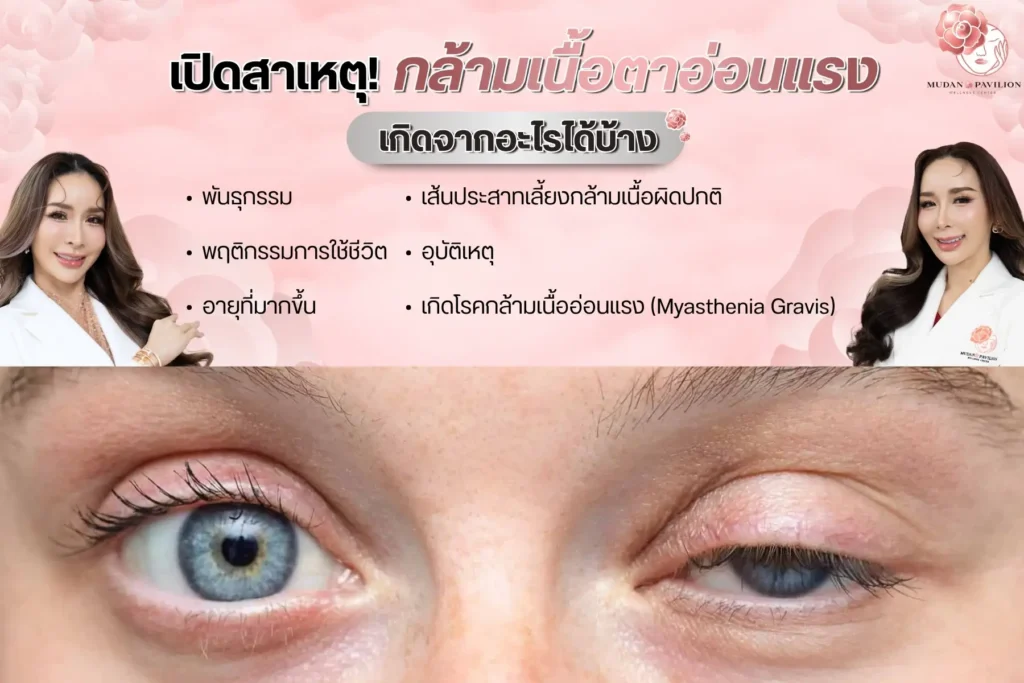
Causes of drooping eyes and uneven eyes
As you know, drooping eyes are a condition in which the eyelids droop more than normal, resulting in partial or complete covering of the pupil, reducing vision and causing discomfort. Asymmetry of the eyes is a difference in the size of the eyelids, the level of the eyelids, or the size of the two eyeballs that are not proportional, which occurs along with drooping eyes. Both drooping eyes and asymmetry of the eyes can be caused by several reasons, as follows:
- Genetics and congenital conditions It is the transmission of certain characteristics through genetics from parents to children. For example, if parents have unequal eyes, their children may have unequal characteristics, or genetic abnormalities such as congenital weakness of the eye muscles.
- age As we age, collagen and elastin production under the skin decreases, causing the skin to lose its elasticity. This results in the skin around the eyes sagging, causing the eyelids to droop. If the muscles that help lift the eyelids weaken, the eyelids can also droop.
- Weak eye muscles It is caused by abnormalities in the muscles that lift the eyelids or maintain eyelid tightness, which may be present from birth or caused by age-related deterioration, resulting in drooping eyes and uneven eyes.
- Loss of tissue, fat, or bone in the orbit As we age, the tissues, fat, and orbital bones that support and support the structures around the eyes atrophy or disappear. This causes the skin, tissues, and muscles that support them to lose their density or collapse, causing the eyelids to droop.
- Some diseases For example, muscle weakness, neurological diseases, cerebrovascular disease, and brain tumors can affect the functioning of the muscles around the eyes, causing the eyelids to droop.
- sunlight As you know, UV rays in the sun damage collagen and elastin beneath the skin, causing the skin around the eyelids to sag. When the eyelids sag, it causes ptosis, which resembles drooping eyes. If the sagging of the eyelids occurs unevenly on both sides, it can result in uneven eyes.
- Frequent and severe eye rubbing It will cause the skin around the eyelids to become irritated and inflamed, causing the skin to lose its elasticity and cause the eyelids to droop.
- Improper contact lens wearing This will cause the skin around the eyelids to be pulled and the skin to sag, resulting in drooping eyelids.
- Staring at the screen for long periods of time This will cause the muscles around the eyes to become tired and overworked, resulting in temporary droopy eyes.
- Accidents around the eyes A severe injury that affects the muscles and nerves that control the eyelid.
- Complications caused by surgery For example, eye surgery that may affect the muscles used to open the eyes.
How to fix droopy eyes, uneven eyes, and weak eye muscles

Eyelid filler injections
Eye filler injections are a waste of time. This treatment involves injecting a filler called Hyaluronic Acid (HA) directly into the upper eyelid. The filler fills in the gaps caused by collapsed fat and tissue, making the eye socket appear fuller. It also supports sagging skin around the eyelids, lifting them, improving the appearance of drooping eyelids and making the eyelid crease more visible. It also stimulates collagen production under the skin, making the skin around the eyes appear firmer and smoother.

Botox injections for the eyelids
This is a treatment by injecting Botulinum Toxin Type A directly into the eyelid area. Botox inhibits the function of the muscles that pull the eyelid down, causing the muscles to relax. The muscles that lift the eyelids will work more efficiently, resulting in the drooping eyelids being lifted up.

Thread lift
This treatment uses the Foxy Eyes Thread Lift technique, which uses threads to create a mesh structure. Thread it into the drooping outer corner of the eye and lift it above the outer corner of the eye. The thread barbs will entangle with the skin, lifting it up. This results in sharper, more defined eyes and a more charming appearance. It also helps to address the problem of drooping eyelids.
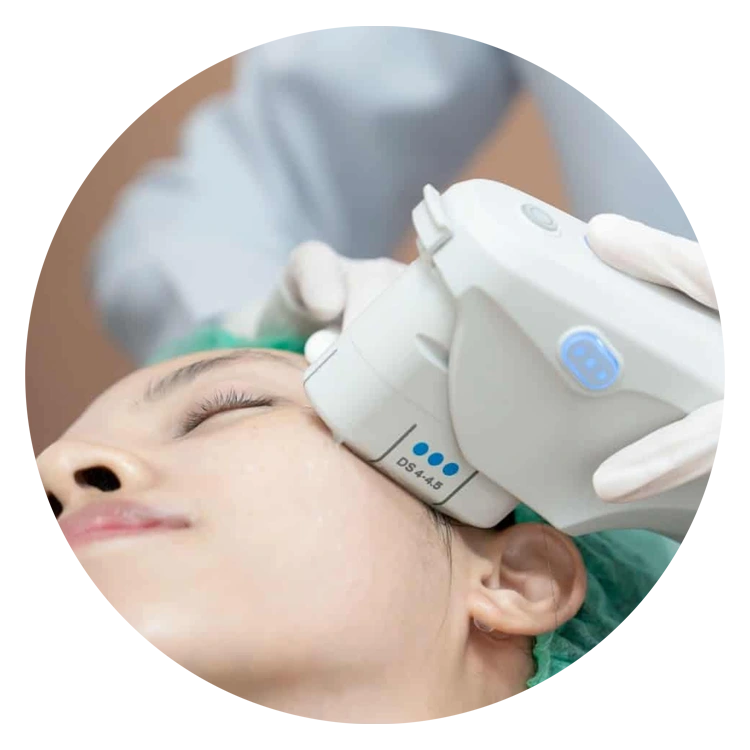
Ulthera
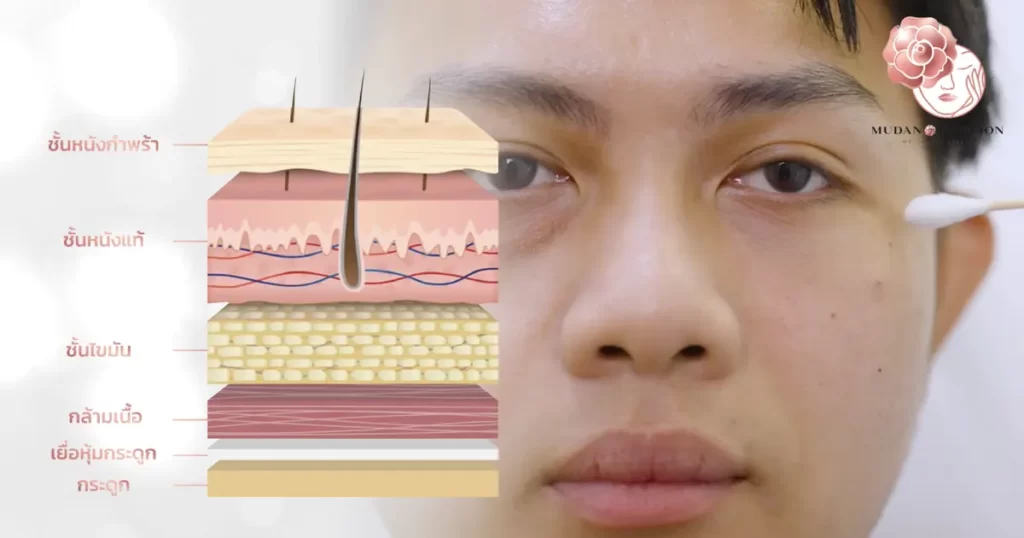
It is a treatment using focused ultrasound technology that shoots deep into the SMAS layer of the skin. Ulthera stimulates collagen production and causes collagen fibers to contract, resulting in the eyelids being lifted and tightened, making the eyes appear brighter and rounder.
Natural solutions
- Exercise your eye muscles, such as the wide-eyed pose by opening your eyes as wide as possible and holding them for 5-10 seconds, then closing them completely. Repeat 5-10 times. Or, try the eyebrow-raising pose by placing both index fingers under your eyebrows and pushing them up to hit your brow bone. Then, slowly close your eyes. You will feel resistance from your fingers. Hold for 3-5 seconds and repeat 5 times. This method stimulates blood circulation and helps strengthen the muscles used to open your eyes, as well as helping to tighten your eyelids.
- Gently massage and press on the area around the eyes, 2-3 times a day for 5 minutes each time. This will help stimulate blood and lymph circulation, reducing swelling and relaxing the skin around the eyes.
- Alternate hot and cold compresses by placing a towel soaked in hot water over the eyes for about 30 seconds, followed by a towel soaked in cold water for about 30 seconds. Repeat this 3 times, 1-2 times a day. This will stimulate blood circulation around the eyes and help relax the eye muscles.
- Eating nutritious foods, such as foods high in antioxidants and foods rich in omega-3, which help nourish the eyes and help slow down the deterioration of the skin or muscles.
- Makeup can help disguise uneven eyes, such as applying eyeliner or false eyelashes to create balance between the two eyes.
- Using special contact lenses (Ptosis Crutch) is a contact lens designed to slightly lift the upper eyelid.