

Have you ever heard the phrase...? "Weight loss pen" Confused about what it is? Why is everyone talking about it lately? On social media, in reviews, even friends have started trying it. Many wonder what kind of drug is injected, how it works to make you feel full faster and eat less, and whether the weight loss claims are real or just marketing hype. Before deciding to try it, let's get to know it better so you can determine if it's right for you.
Main Idea
- Weight loss pens are a procedure to control weight and treat obesity. The medications used are GLP-1 Receptor Agonists such as Liraglutide, Semaglutide, or some formulations may include a combination of GLP Agonists such as Tirzepatide. These drugs promote a feeling of fullness, reduce appetite, and control blood sugar levels.
- The weight-loss pen can effectively help with weight loss, resulting in a reduction of approximately 5% – 15% of initial weight within 6–12 months. However, the timeframe may vary depending on the dosage and individual body response.
- The weight loss pen is suitable for individuals with a Body Mass Index (BMI) ≥ 30 or ≥ 27, chronic diseases, and those with localized fat deposits, who are resistant to weight loss despite diet and exercise, as well as those who experience the yo-yo effect.
- Weight loss pens come in various brands, differing in their active ingredients, mechanism of action, and injection frequency. In Thailand, weight loss pens approved by the Thai FDA include Mounjaro, Wegovy, Ozempic, and Saxenda.
What is a weight-loss pen?
Weight loss pen injection is a procedure designed to control weight and treat obesity. It involves using a large, pen-like medical device to inject weight-control medications subcutaneously with a small needle. The medications used are typically GLP-1 Receptor Agonists such as Liraglutide, Semaglutide, or some formulations may include a GIP Agonist such as Tirzepatide.
Weight loss pens work similarly to hormones. GLP-1 (Glucagon-Like Peptide 1) It enters the body and sends signals to the hypothalamus in the brain, resulting in a slowing of gastric contractions. This leads to slower digestion, a longer feeling of fullness, reduced appetite, and consequently, less food intake. It also helps control blood sugar levels by stimulating the pancreas to release more insulin when blood sugar levels are higher than normal, thus stabilizing blood sugar and reducing the secretion of glucagon, a hormone that also increases blood sugar.
The ingredients and properties of the weight loss pen.
The medication used is GLP-1 (Glucagon-Like Peptide-1), a hormone naturally secreted in the small intestine after eating. In medicine, this hormone, or its mimics, is used to develop drugs for controlling blood sugar levels and as highly effective weight-loss medications. GIP (Glucagon-Like Peptide-1) is a hormone produced by K-cells in the upper part of the small intestine, which is released when the body consumes food, especially fats and sugars.

Who is a weight-loss pen suitable for?
The weight loss pen is suitable for individuals with a Body Mass Index (BMI) ≥ 30 or ≥ 27, and those with chronic diseases such as diabetes, hypertension, and high cholesterol. It's also suitable for individuals with localized fat accumulation, such as in the abdomen, upper arms, and legs; those who are resistant to weight loss despite diet and exercise; those who experience the yo-yo effect after other weight loss methods; those seeking safe and healthy weight loss; and those with abnormally large appetites or snacking habits.
Does using a pen for weight loss really work?
This weight-loss supplement can effectively help you lose weight, typically 5% – 15% of your initial weight within 6–12 months. However, the timeframe may vary depending on the dosage and individual body response. It also helps to firm up body proportions because it reduces appetite, leading to decreased fat accumulation and a noticeable reduction in abdominal and waist circumference. Furthermore, it promotes a feeling of fullness that lasts longer, reducing cravings for sweets and fatty foods, and does not cause fatigue associated with dieting.
Possible side effects.
Weight loss pens contain GLP-1 receptor agonists, which work by making you feel fuller for longer and reducing appetite. While the injections have many advantages, they can also cause side effects. Common side effects seen in the first 1-4 weeks after injection include nausea, vomiting, bloating, constipation, diarrhea, headache, fatigue, dry mouth, dry throat, and a bitter taste in the mouth. More serious side effects are rare, such as the risk of pancreatitis and gallstones. It should not be used in individuals with a family history of thyroid cancer. Furthermore, if the medication is not stopped properly, there is a high chance of a yo-yo effect, as the drug only temporarily suppresses appetite. Once the medication is stopped, appetite returns to its original level, and if eating habits are not adjusted and muscle mass is lost, weight will bounce back quickly.
Examples of weight-loss pen brands that have been approved by the Thai FDA.
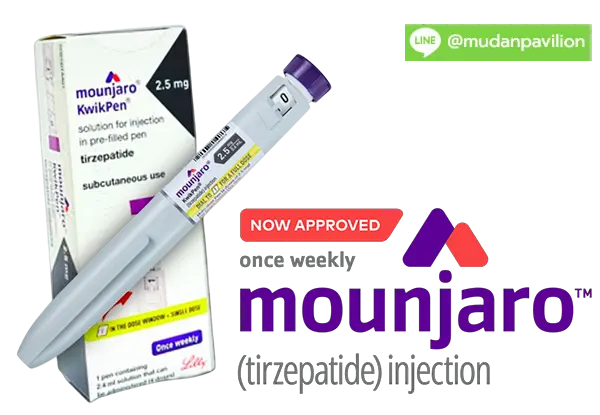
Mounjaro
Mounjaro, trade name “Tirzepatide,” is an injectable medication in the dual GIP and GLP-1 receptor agonist class. It's a novel weight-loss and blood sugar-controlling drug that works by suppressing hunger, promoting satiety without fasting, improving metabolism, and regulating metabolic processes. After injection, weight loss can exceed 15% – 20% or even more, depending on various factors. It's also approved by the U.S. FDA for the treatment of type 2 diabetes and for weight management.

Wegovy
Wegovy, or its trade name "Semaglutide," mimics the action of the hormone GLP-1 (Glucagon-Like Peptide-1). GLP-1 stimulates insulin secretion, which controls blood sugar levels. Wegovy, however, inhibits the release of glucagon, which increases blood sugar. It slows the passage of food through the stomach, resulting in longer-lasting satiety and reduced appetite. It also stimulates fat metabolism and can lead to weight loss averaging approximately 151 TP3T or potentially more.

Ozempic
Ozempic is an injectable diabetes medication administered via a pen. Its active ingredient is semaglutide, similar to Wegovy. Ozempic is a GLP-1 receptor agonist, acting by mimicking the body's GLP-1 hormone. This results in a feeling of fullness, reducing appetite, and also stimulates insulin secretion to maintain balanced blood sugar levels by reducing glucagon production. It is primarily used to treat type 2 diabetes.

Saxenda
Saxenda contains the active ingredient Liraglutide, a substance with a structure similar to the hormone GLP-1 (Glucagon-Like Peptide-1) found in the body. This promotes a feeling of fullness, reduces appetite, and leads to less food consumption. It also stimulates the pancreas to release insulin and reduces glucagon levels when blood sugar is higher than normal, thus maintaining stable blood sugar levels.