

Sweaty hands and feet, to the point of feeling embarrassed every time you have to shake hands with someone or take off your shoes in public, is a problem many people face but don't know how to solve. Some think it's normal, while others have endured it for decades without knowing that there are real causes and solutions. It could be due to genetics, stress, or hormonal imbalances. This problem actually has a name: "Excessive sweating" And most importantly, It is treatable. This article compiles all the causes, prevention methods, and solutions. After reading it, you won't have to worry anymore.
Key points
- Excessive sweating in hands and feet. This condition is often caused by the body's sweat glands being abnormally stimulated, resulting in excessive sweat production. Other possible causes include stress and anxiety, hormonal changes, autonomic nervous system disorders, and hypoglycemia.
- Excessive sweating in hands and feet. This will have an impact on mental health, work and social interactions, self-image, activities, and health.
- How to prevent sweaty hands and feet at home. It's easy and inexpensive to reduce excessive sweating, such as modifying habits, choosing appropriate products, and regularly cleaning your body.
- How to treat sweaty hands and feet quickly. Examples include Botox injections, anticholinergic medications, topical creams, microwave therapy (MiraDry), and nerve cutting surgery.
Causes of excessive sweating in the hands and feet.
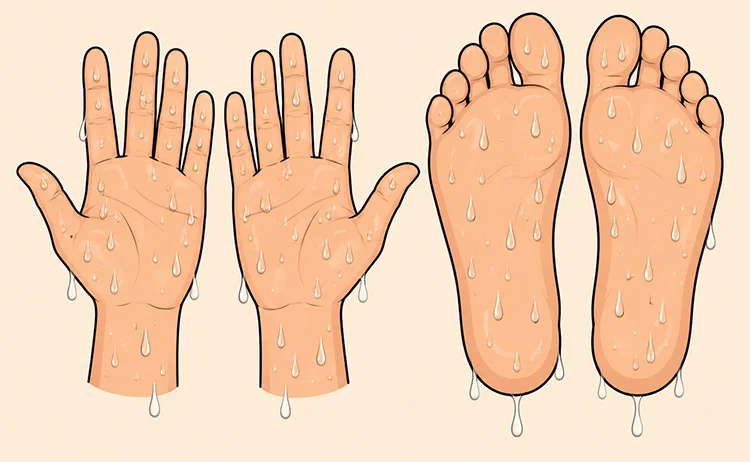
Excessive sweating of the hands and feet, or medically known as "hyperhidrosis," is usually caused by the body's sweat glands being abnormally stimulated, resulting in the glands producing more sweat than normal, disproportionate to the environment or temperature. However, it can also be caused by underlying medical conditions that may significantly impact daily life. Causes of excessive sweating in the hands and feet include:
- Stress and anxiety. When the body experiences stress or anxiety, the brain sends signals through the sympathetic nervous system to the adrenal glands, causing them to release adrenaline and cortisol. These hormones directly stimulate the sweat glands, especially in the palms and feet.
- Hormonal changes For example, during adolescence, hormonal changes stimulate increased sweating. Similarly, during menopause, estrogen levels decrease, disrupting the body's temperature regulation system and leading to hot flashes and excessive sweating. Furthermore, hyperthyroidism causes the body's metabolism to work faster than normal, resulting in increased heat production and dissipation through sweat.
- Autonomic nervous system disorders This is caused by an overactive sympathetic nervous system, which sends signals to stimulate the sweat glands, resulting in excessive sweating even when body temperature is constant or not engaging in strenuous activity.
- Hypoglycemia When blood sugar levels are lower than normal, the body releases adrenaline to stimulate the liver to release sugar. This process has a side effect: it stimulates the sweat glands to work harder, especially in the hands and feet, which is often accompanied by symptoms such as palpitations, tremors, and dizziness.
- Diabetes For diabetic patients with poorly controlled blood sugar levels, hypoglycemia may occur. Furthermore, in the long term, diabetes can damage the autonomic nerves, which control sweat gland function, resulting in excessive sweating or, in some cases, no sweating at all.
- Heart disease and cardiovascular disease When the heart is not functioning efficiently, the body stimulates the sympathetic nervous system to compensate, resulting in excessive sweating in the feet and hands. This is especially true in individuals with heart failure or coronary artery disease. Excessive sweating in the hands and feet may be a warning sign of heart disease.
- Side effects caused by medication. Some medications stimulate the sweat glands directly or through the nervous system, such as antidepressants, blood pressure medications, pain relievers, or cancer drugs.
- Infection and fever. When the body becomes infected, the immune system releases pyrogens, which stimulate the hypothalamus in the brain to raise body temperature to inhibit the growth of pathogens. However, when the fever subsides, the body releases heat through excessive sweating, especially in the hands and feet.
What is hyperhidrosis? How does it differ from normal sweating?
condition Hyperhidrosis This condition is when the body produces excessive sweating to maintain body temperature. The sweat glands malfunction even when in an air-conditioned room, resting, and not stressed. This differs from normal sweating, as shown in the table below.
| section | Normal sweating. | Hyperhidrosis |
| Causes of occurrence | When temperatures are high, the body tries to regulate itself, or it can be caused by exercise, eating spicy food, and stress. | The nervous system is abnormally overactive in controlling the sweat glands. |
| Areas that sweat. | Throughout the body | It most commonly occurs on the palms, soles of the feet, armpits, or face. |
| The amount of sweat that is secreted. | An appropriate amount for heat dissipation. | Sweating can cause excessive drenching, dripping, or even skin irritation. |
| Ejaculation duration | Sweat is produced when the body needs to regulate its temperature. | I sweat constantly, even in cold weather. |
| effect | It does not affect daily life. | This can negatively impact work performance, social interactions, and lead to a loss of self-confidence. |
What are the effects of excessive sweating in the hands and feet?
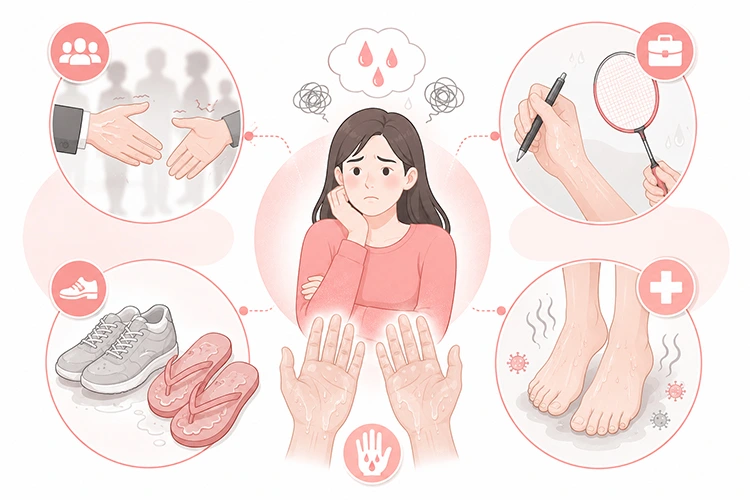
Excessive sweating of the hands and feet may not just be a hygiene issue or a temporary annoyance, but it can also have other consequences, such as: Mental It can lead to a loss of confidence and anxiety when your hands are wet. In terms of work and social life. This can make one appear to have a poor personality or be distant, as they avoid shaking hands, which is crucial in getting to know people or conducting business. In terms of image. Choosing closed-toe shoes to hide the wetness is important, as sandals are not an option because your feet could slip out. Regarding activities. Holding a pen to write might be difficult due to wet hands, or playing sports like holding a badminton or tennis racket, or lifting weights, could be dangerous due to slipperiness. Yoga and gymnastics, which require gripping the surface, might also be difficult.Health Unpleasant odors, especially around the feet, can occur when sweat mixes with bacteria in damp shoes, resulting in a strong, foul smell. Skin conditions can also develop when skin remains constantly moist, becoming soft and weakened, making it more susceptible to fungal or bacterial infections, and leading to frequent rashes and itching.
What diseases could cause sweaty hands and feet?
hyperthyroidism
This condition occurs when the thyroid gland, which controls metabolism, overworks, causing the body to overheat and sweat excessively, along with symptoms such as hand tremors, hair loss, or frequent thirst.
Diabetes
Poorly controlled blood sugar levels can lead to hypoglycemia. Furthermore, in the long term, diabetes can damage the autonomic nerves that control sweat gland function, resulting in excessive sweating or, in some cases, no sweating at all.
Cardiovascular disease
When the heart is not functioning efficiently, the body stimulates the sympathetic nervous system to compensate, resulting in excessive sweating in the feet and hands, along with palpitations and shortness of breath. This is especially true in individuals with heart failure or coronary artery disease. Excessive sweating in the hands and feet may be a warning sign of heart disease.
Stress and anxiety disorders.
When the body experiences stress or anxiety, the brain sends signals through the sympathetic nervous system to the adrenal glands, causing them to release adrenaline and cortisol. These hormones directly stimulate the sweat glands, especially in the palms and feet.
Skin Disease
When the skin sweats, it becomes moist, which makes it easier for fungal infections to occur, as well as bacterial infections, leading to itchy rashes.
How to prevent sweaty hands and feet on your own.
Preventing sweaty hands and feet is easy and free of charge. Methods such as lifestyle changes, choosing appropriate products, and regular personal hygiene can help reduce excessive sweating. Here are some ways to prevent sweaty hands and feet:
- Taking a cold shower Taking a cold shower will help lower your body temperature and reduce sweating.
- Choosing to wear clothing that allows for good ventilation. For example, clothing made from cotton or linen helps wick away moisture and keeps the body temperature cool.
- The choice of using alum. Alum is a natural substance that helps reduce sweat production, tighten pores, and soothe the skin. It is most commonly applied directly to areas prone to sweating, such as the armpits or palms.
- Choosing to use baking soda. Baking soda is alkaline and has properties that help absorb moisture and reduce odor that may be associated with sweaty feet. Mix baking soda with a little water to form a creamy paste, then apply it to your hands or feet and leave it on for about 10-15 minutes before rinsing it off.
- Soaking hands and feet in tea. Tea leaves contain tannic acid, which helps to temporarily tighten pores and reduce sweating. Place 2-3 tea bags in water, then soak your hands and feet for about 15-20 minutes.
- Drink enough. Drinking 7-8 glasses of water a day hydrates the body, cools it down, and reduces the need for the body to sweat to regulate temperature.
- Avoid eating foods with strong and spicy flavors. Because chili peppers, or spices containing capsaicin, stimulate the body to feel hot and cause sweating.
- Managing emotions and stress. Since stress is a major trigger for sweat glands, mental training such as deep breathing, meditation, or yoga can help reduce the activity of the sympathetic nervous system, which is a key factor in directly stimulating the sweat glands.
- Choosing antiperspirants that contain aluminum. It can be applied to the hands or feet to help reduce sweating. It should be applied before bed for maximum effectiveness, and then washed off in the morning.
- Being in an air-conditioned room or in front of a fan all the time. To allow for ventilation in the hands, especially for individuals in professions such as writers, graphic designers, translators, etc.
- Maintaining a healthy weight. Being overweight forces the body to work harder and produce more heat, resulting in excessive sweating. Controlling one's weight can help address this problem.
How to treat sweaty hands and feet quickly.
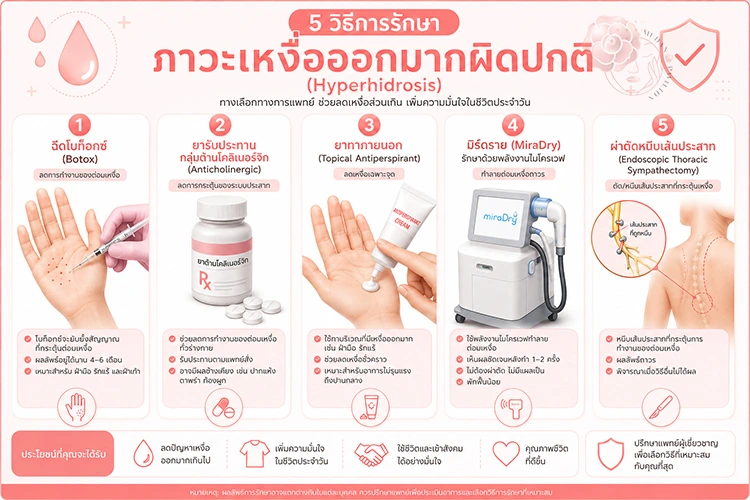
Botox injection To reduce excessive sweating, treatment involves injecting botulinum toxin type A. Botox works by inhibiting the function of the neurotransmitter acetylcholine, which transmits signals from nerves to the sweat glands. When these nerve signals are blocked, sweat gland activity decreases. Therefore, reduced sweating also decreases moisture and bacterial buildup. Results will begin to be visible within 3-7 days after injection in the feet or hands, with the most noticeable results within 14 days. The effects last approximately 4-12 months, depending on the individual, and can reduce sweating by more than 80-90% in the injected area. Read more here. Smelly feet and excessive sweating can be treated with Botox injections in the soles of the feet.
Taking anticholinergic medications. To treat excessive sweating, which is controlled by the autonomic nervous system via the neurotransmitter acetylcholine, anticholinergic drugs work by blocking muscarinic receptors in the sweat glands. This prevents acetylcholine from binding to the receptors, resulting in the sweat glands ceasing to function or functioning less. However, taking this type of medication can cause side effects such as blurred vision, dry mouth, dry eyes, or constipation.
Applying ointment To suppress sweating, aluminum chloride is used. When applied to the skin, aluminum chloride penetrates the sweat gland ducts, reacting with proteins in the cells, causing the ducts to swell and narrow. This reduces or stops sweating in the applied area. This medication does not permanently destroy the sweat glands, but only temporarily blocks them.
Microwave therapy (MiraDry) This procedure uses high-frequency electromagnetic waves to penetrate the skin and reach the subcutaneous layer. The heat generated permanently destroys sweat glands and sebaceous glands without damaging the upper tissue layers. This method can reduce sweating by approximately 70–821 TP3T, and most patients do not need repeat treatment because the destroyed sweat glands cannot regenerate.
Nerve cutting surgery This procedure involves endoscopic surgery in the thoracic area to clamp or sever the sympathetic nerve, which controls the sweat glands in the hands. When the nerve is severed, the signals for sweat production cannot reach the nerves. This method is suitable for individuals with severe hyperhidrosis.
Frequently Asked Questions (FAQ)
Is it true that stress can cause sweaty hands?
Stress can indeed cause sweaty hands. When the body is stressed, the brain sends signals through the sympathetic nervous system to the adrenal glands, causing them to release adrenaline and cortisol. These hormones directly stimulate the sweat glands, especially in the palms and feet.
Is it true that Botox can treat excessive sweating in the hands?
Botox injections can effectively treat excessive hand sweating. Botox works by inhibiting the function of a neurotransmitter called acetylcholine, which transmits signals from nerves to the sweat glands. When these nerve signals are blocked, the sweat glands function less.
Does drinking more water help?
Drinking more water helps hydrate the body, cools the internal body temperature, and reduces the need for the body to sweat to regulate body temperature.