

Are weight-loss pens any good? This question is being widely discussed lately, especially among people who have tried many weight-loss methods without success. Weight-loss pens, or what many know as weight-loss injections, are becoming an increasingly popular option among doctors. However, many people remain hesitant, unsure of their effectiveness, safety, and potential side effects. This article will provide a straightforward explanation to help you make an easier decision.
Key points
- Weight loss pens are medical devices that come in the form of injectable medication. The drug delivery system is designed to resemble a large pen in size and shape. Its mechanism of action is based on the use of GLP-1 Receptor Agonist, a substance that binds to the GLP-1 (Glucagon-Like Peptide-1) hormone receptor, which is released in the small intestine after eating.
- Weight loss pens are medical devices that are safe and highly effective, but must be used under the supervision and prescription of a specialist physician. This is because the injected medication mimics hormones in the body to signal the brain to feel full for longer or reduce appetite, unlike typical weight-loss medications.
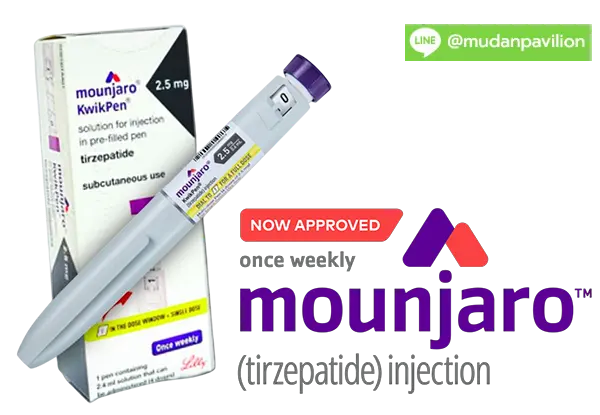
How a weight-loss pen works.
A weight loss injection pen is a medical innovation that delivers a medication for injection into the subcutaneous fat layer. The device is designed to resemble a large pen and comes with a very small needle, which is used for weight control and reduction.
Regarding the medications used. GLP-1 (Glucagon-Like Peptide-1) is a hormone naturally secreted in the small intestine after eating. In medicine, this hormone, or its mimics, is used to develop medications for controlling blood sugar levels and as highly effective weight-loss drugs. GLP-1 is produced by K-cells in the upper part of the small intestine and is released when the body consumes food, especially fats and sugars.
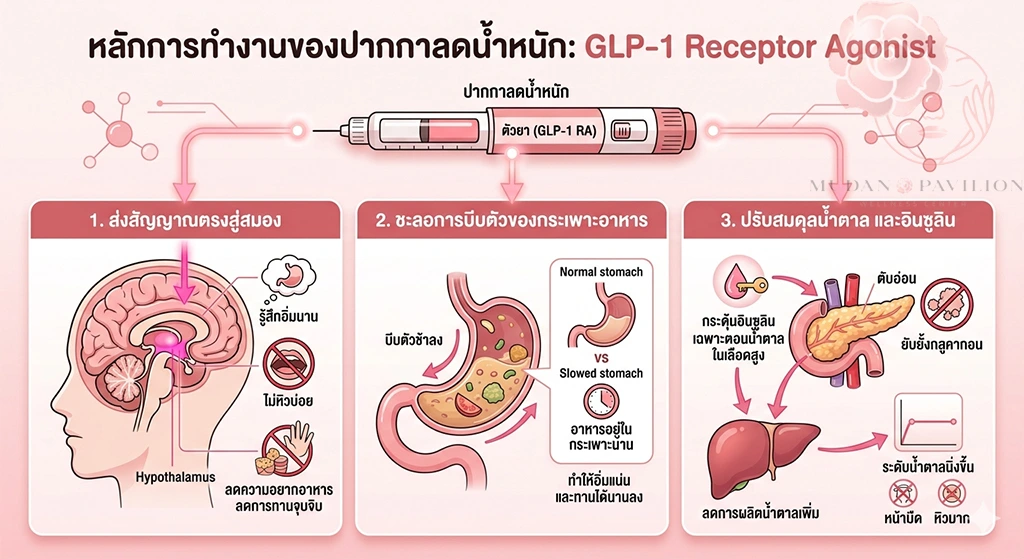
How a weight-loss pen works. It functions as a GLP-1 Receptor Agonist, a substance that binds to the GLP-1 (Glucagon-Like Peptide-1) hormone receptor. GLP-1 is a hormone released in the small intestine after eating to signal the body that it is full. The drug works through three main mechanisms in the body, as follows:
- Sending signals directly to the brain. After injection, the drug binds to receptors in the hypothalamus in the brain, which controls hunger and satiety. This results in feeling full for longer, reducing hunger pangs, curbing appetite, and decreasing snacking.
- Slow down the contractions of the stomach. The medication works by telling the stomach to contract more slowly, causing food to remain in the stomach longer than usual, resulting in a feeling of fullness and allowing you to eat for a longer period.
- Balance blood sugar and insulin levels. The medication stimulates the pancreas to release insulin only when blood sugar is high, in order to utilize the sugar. It also inhibits the release of glucagon, a hormone that produces more sugar, allowing the body to control blood sugar levels more stably, preventing fluctuations that can cause dizziness or excessive hunger.
Are weight-loss pens safe?
Weight loss pens are safe and highly effective medical devices, but they must be used under the supervision and prescription of a specialist physician. The injected medication mimics hormones in the body to signal the brain to feel fuller for longer or reduce appetite, unlike typical weight-loss medications. However, in the initial stages after injection, some users may experience nausea, bloating, or constipation, which usually improve as the body adjusts. This medication is contraindicated for individuals with a family history of certain types of thyroid cancer or pancreatitis.
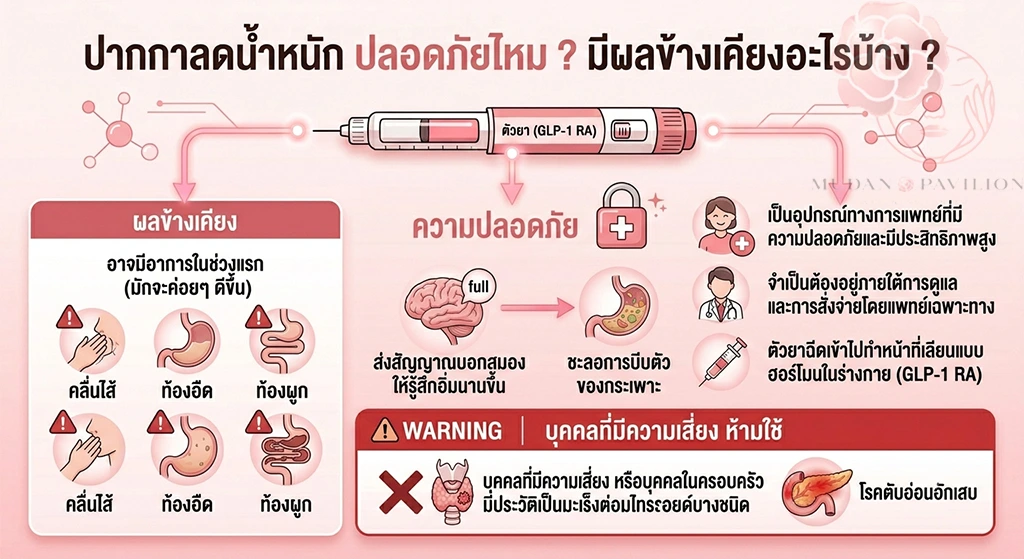
What are some side effects of weight-loss pens?
Weight loss pens contain GLP-1 receptor agonists, which work by making you feel fuller for longer and reducing appetite. While the injections have many advantages, they can also cause side effects. Common side effects seen in the first 1-4 weeks after injection include nausea, vomiting, bloating, constipation, diarrhea, headache, fatigue, dry mouth, dry throat, and a bitter taste in the mouth. More serious side effects are rare, such as the risk of pancreatitis and gallstones. It should not be used in individuals with a family history of thyroid cancer. Furthermore, if the medication is not stopped properly, there is a high chance of a yo-yo effect, as the drug only temporarily suppresses appetite. Once the medication is stopped, appetite returns to its original level, and if eating habits are not adjusted and muscle mass is lost, weight will bounce back quickly.
Are weight-loss pens any good?
Weight loss pens are a promising medical innovation that delivers real results. After injection, they can help reduce weight by approximately 51 to 151 TP3T of the initial weight within 6–12 months, although the timeframe may vary depending on the dosage and individual response. Additionally, they reduce appetite, decrease accumulated fat, resulting in a noticeable reduction in abdominal and waist circumference. They also help modify eating habits over the long term, leading to a preference for smaller food intake. Furthermore, they can lower blood sugar levels, reduce blood pressure, and decrease cholesterol levels, thereby reducing the risk of heart disease. However, weight loss pens may not be suitable for everyone.